
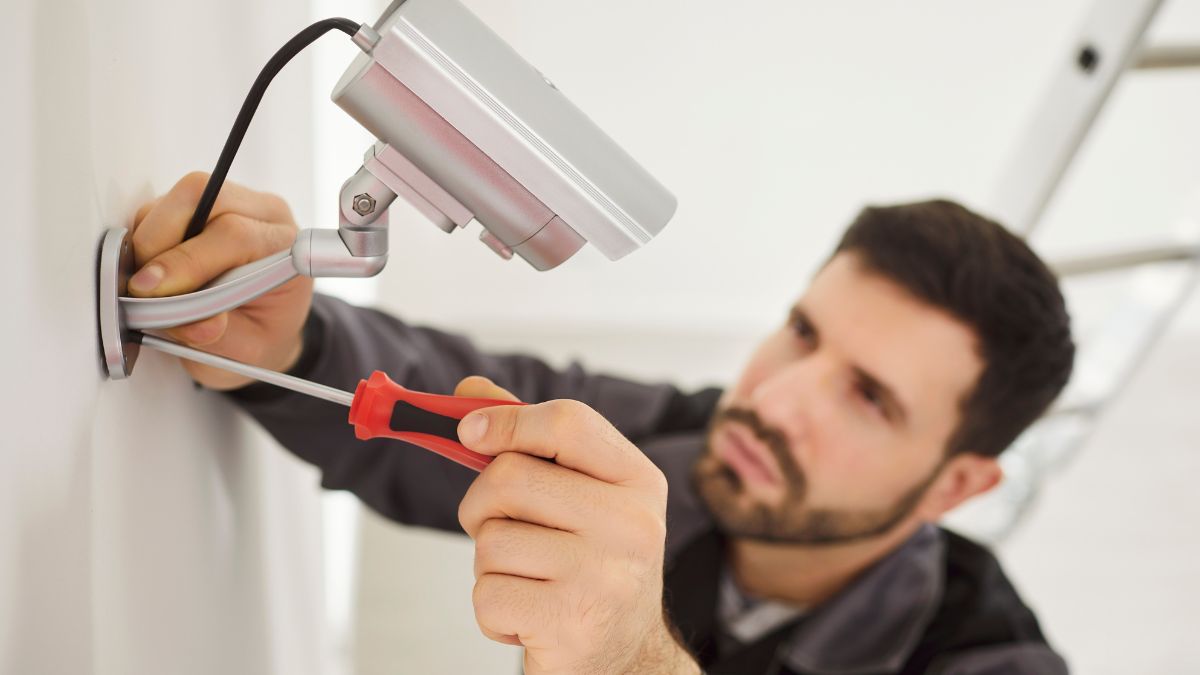
Home security cameras and video doorbells can help homeowners keep a closer eye on entrances, driveways, yards, and other areas around the property.
The type of wiring required depends on the equipment, how it receives power, and how it sends video or data, and this article goes over the common wiring options used for these security devices.
Wiring For Home Security Cameras and Doorbells Is Needed
The wiring for home security cameras and doorbells can vary depending on whether the equipment uses an existing electrical connection, a dedicated low-voltage cable, Ethernet, coaxial cable, or another power source.
Some modern security devices are designed to work with wiring that may already be installed in a home, while other systems require new cables to be routed through walls, ceilings, attics, or exterior areas.
Before installing equipment, it is important to understand the power and connection requirements listed by the manufacturer.
A camera that receives power through Ethernet has different wiring needs than a traditional wired camera connected to a separate power supply. Video doorbells may also require a certain voltage from the existing doorbell transformer.
Checking the electrical and connection requirements before running new cable can help prevent compatibility and performance problems.
Existing Doorbell Wires for Smart Doorbell Installation
Many homes already have wiring that connects the doorbell button to a transformer and indoor chime. Some smart video doorbells can use these existing wires, making it possible to replace the old button without installing an entirely new electrical connection.
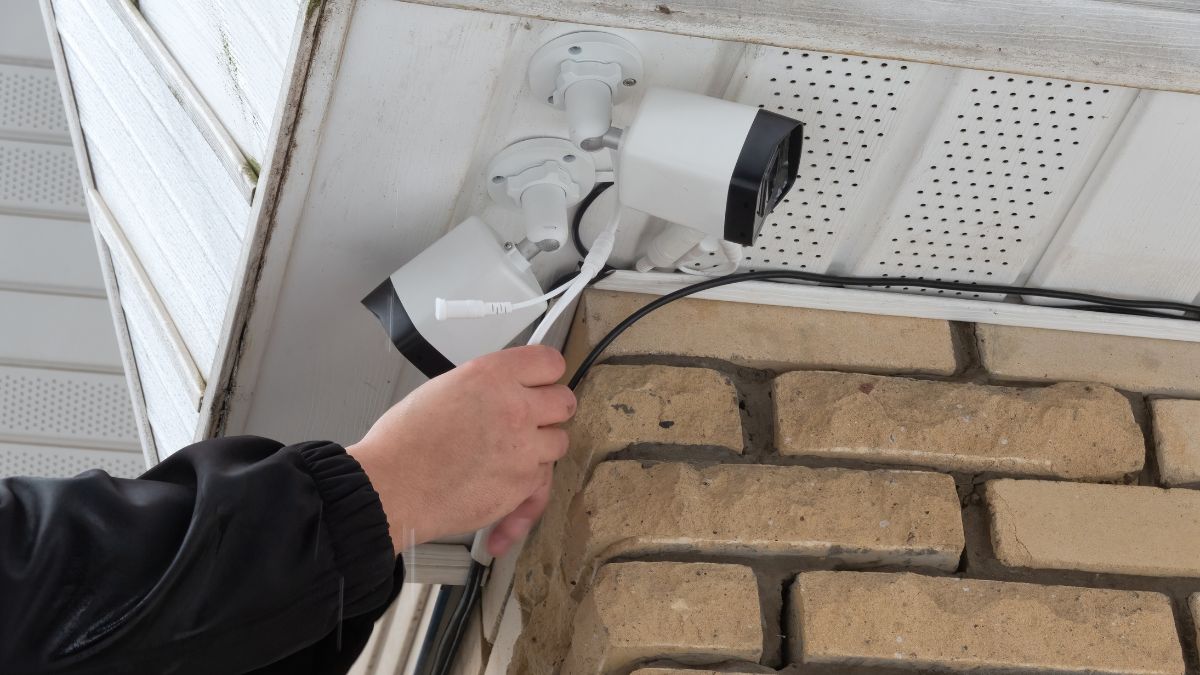
However, the existing transformer must provide the voltage and power required by the new device.
When evaluating wiring for home security cameras and doorbells, existing doorbell wires should be inspected for loose connections, corrosion, damaged insulation, and other problems.
Older wiring may still function with a basic doorbell but may not be suitable for a device that continuously operates a camera, microphone, Wi-Fi connection, motion sensor, and other electronic components.
Existing wiring should be checked for both physical condition and electrical compatibility before connecting a new smart doorbell.
Low-Voltage Wiring for Video Doorbells
Video doorbells commonly operate on low-voltage electrical systems rather than standard household line voltage. A transformer reduces the home’s electrical voltage to a lower level that can safely power compatible doorbell equipment.
The exact voltage range can vary by manufacturer and model, which is why the specifications for the individual device should always be checked before installation.
Low-voltage wiring provides a continuous source of power without requiring the homeowner to regularly remove and recharge a battery.
When planning wiring for home security cameras and doorbells, the cable may need to run between the transformer, chime, and exterior doorbell location.
If an older transformer does not provide enough power for a newer video doorbell, the transformer may also need to be replaced with a compatible model.
Coaxial Cables for Wired Security Cameras
Coaxial cable is commonly associated with traditional analog and HD-over-coax security camera systems. These systems generally use coaxial cable to carry the video signal from each camera to a digital video recorder, commonly called a DVR.
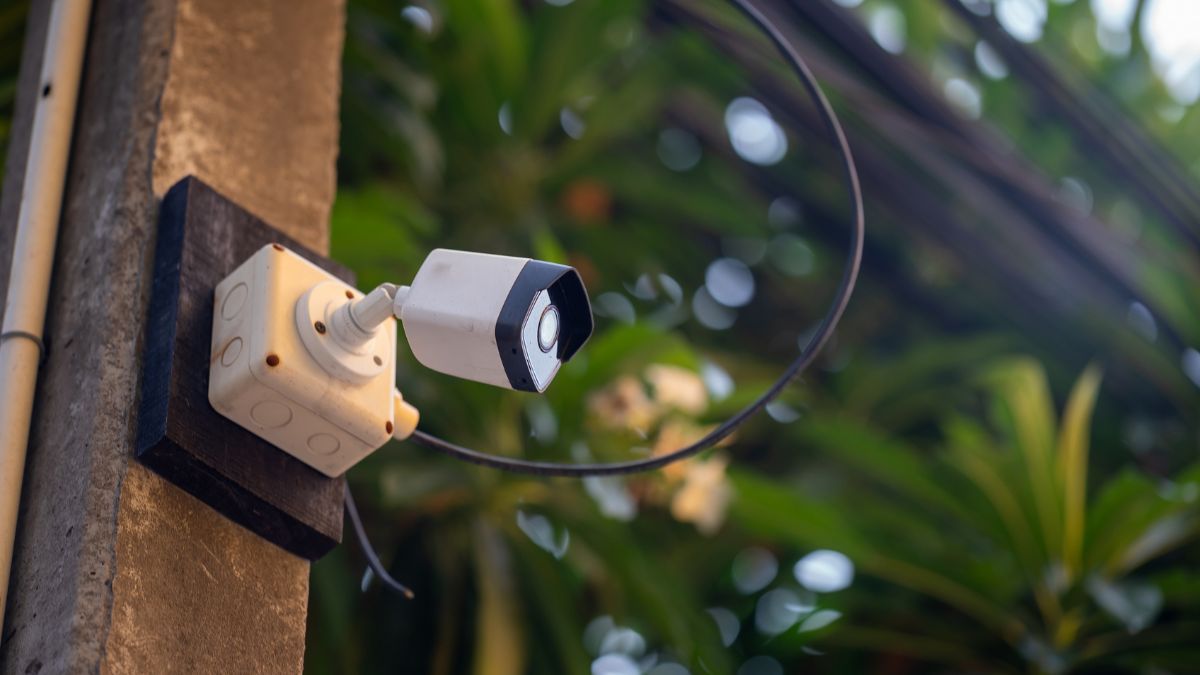
Depending on the setup, a separate cable or a combined cable may also provide electrical power to the camera.
Coaxial systems can still be useful when a property already has compatible security camera cables installed. Reusing suitable existing cables may reduce the amount of new wiring that needs to be routed through the building.
When comparing different types of wiring for home security cameras and doorbells, homeowners should remember that coaxial camera systems work differently from newer network cameras that transmit digital information through Ethernet.
The recording equipment and cameras must support the same video and cable technology for the system to operate correctly.
Ethernet Cables for PoE Security Cameras
Ethernet cable is widely used with modern IP security cameras, especially cameras that support Power over Ethernet, also known as PoE. A PoE connection can carry network data and electrical power through the same ethernet cable.
This allows a camera to communicate with a network video recorder, PoE switch, or other compatible network equipment without requiring a separate electrical outlet beside the camera.
Common Ethernet cable categories used for security installations include Cat5e and Cat6, although the correct choice depends on the system requirements, installation environment, cable length, and network equipment.
When installing wiring for home security cameras and doorbells, Ethernet may be especially useful for cameras located around the exterior of a house where running separate data and power cables would be less practical.
Using one compatible Ethernet cable for both power and data can simplify the physical installation of a PoE camera system.
Cable routes still need to be planned carefully, particularly when wires pass through attics, walls, garages, or outdoor areas. The cable type and installation method should also be appropriate for the environment where the wiring will be located.
Power Cables for Direct-Wired Camera Systems
Not every wired security camera receives power through Ethernet. Some cameras require a separate power cable that connects the device to an approved power adapter, centralized power supply, or another compatible source.
In these systems, one connection may handle video or network communication while another provides the electricity needed to operate the camera.
Separate power wiring can provide a dependable connection, but the power source needs to match the voltage and electrical requirements of the camera.
Connecting equipment to an incorrect power supply can cause performance problems and may damage the device.
Installers also need to consider where adapters, power supplies, and recording equipment will be located so that cables can reach each camera without creating exposed or poorly protected wiring.
The layout of wiring for home security cameras and doorbells should be planned before holes are drilled or cables are pulled through the home.
Camera locations, cable distances, access to electrical power, recording equipment, network hardware, and future maintenance can all influence where wires should run.
Careful planning can create a cleaner installation while making it easier to service or replace security equipment later.