

A home theater should feel clear, balanced, and comfortable every time you watch a movie, show, or sporting event. While speakers and screens get most of the attention, the room itself plays a major role in how everything sounds.
This article goes over do you need acoustic panels and the issues they can help solve in a home theater.
Do You Need Acoustic Panels For At Home Theaters?
When asking do you need acoustic panels, it helps to understand how sound behaves inside a room. Sound does not only travel from the speakers to your ears.
It also bounces off walls, ceilings, floors, windows, and furniture. In a home theater, these reflections can make audio feel messy, sharp, or unclear, even when the speaker system is high quality.
Acoustic panels are designed to absorb some of this extra sound energy. They do not make a room completely silent, and they are not the same as soundproofing.
Instead, they help control how sound moves inside the space so the audio feels cleaner and more balanced. A well-treated home theater can make everyday movies, music, and TV shows sound much more natural without requiring louder volume.
Not every room needs the same number of panels. A small carpeted room with soft furniture may need less treatment than a large room with hard floors, bare walls, and high ceilings.
The goal is not to cover every surface, but to place panels where they can solve the most noticeable sound problems.
Controls Bass Buildup for Sound Performance
Bass is another important part of do you need acoustic panels for a home theater. Low-frequency sound behaves differently than higher-frequency sound.
Bass waves are longer and can collect in corners, along walls, or in certain seating areas. This can cause some spots in the room to sound too heavy while other spots feel weak or flat.

Standard wall panels can help with some sound issues, but bass problems often require thicker panels or bass traps placed in strategic areas.
These treatments are commonly used near corners because corners are where low-frequency energy often builds up. When bass is not controlled, explosions, drums, and deep sound effects may feel boomy instead of powerful and clean.
A balanced bass response helps the entire system sound more accurate. Controlling low-frequency buildup can make bass feel tighter, smoother, and more enjoyable without overpowering the rest of the soundtrack.
This is especially helpful in smaller rooms, where bass reflections can become more noticeable due to limited space.
Reduces Echo and Sound Reflection
One of the main reasons people ask do you need acoustic panels is because their home theater sounds echoey. Echo happens when sound waves bounce around the room instead of fading naturally. This can make voices, effects, and music overlap in a way that feels distracting or harsh.
Hard surfaces are usually the biggest cause of strong reflections. Drywall, tile, glass, and bare ceilings can all send sound back into the room.
When too many reflections reach your ears at different times, the sound can feel less focused. Acoustic panels help by absorbing part of that reflected sound before it continues bouncing around the space.
Reducing echo allows the original sound from your speakers to stand out more clearly. This can make the room feel calmer and easier to listen to, especially during action scenes, concerts, or shows with busy background audio.
Instead of raising the volume to overcome poor sound quality, the room itself becomes easier for your ears to process.
Minimizes Sound Transfer Between Rooms
Some homeowners wonder do you need acoustic panels because they want to reduce noise traveling into nearby rooms. Acoustic panels can help improve the sound inside the home theater, but it is important to understand their limits.
Panels mainly absorb reflections within the room, while soundproofing requires blocking sound from passing through walls, ceilings, floors, doors, and vents.
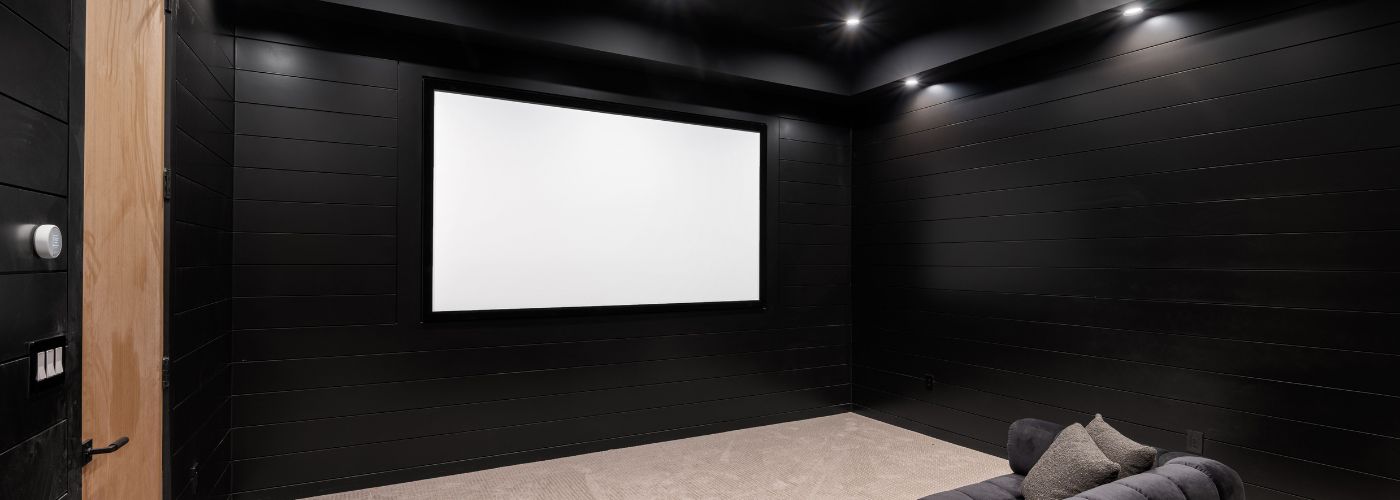
That does not mean panels have no value for reducing noise problems. By absorbing excess sound energy inside the theater, panels may slightly reduce the amount of sound that continues bouncing and spreading.
However, if the goal is to keep loud movie audio from disturbing bedrooms, offices, or neighbors, additional construction methods may be needed.
Acoustic panels are best viewed as part of a sound control plan, not a complete soundproofing solution. For better isolation, homeowners may need solid-core doors, sealed gaps, insulation, double drywall, acoustic caulking, or other sound-blocking materials.
Panels can still improve comfort, but they work best when paired with the right expectations.
Enhances Surround Sound Accuracy
Surround sound depends on placement, timing, and clarity, which is why do you need acoustic panels matters in a theater setup.
A surround system is designed to make sound feel like it is coming from specific directions. When reflections are too strong, they can blur those directional cues and make the audio feel less realistic.
For example, a sound effect meant to come from behind you may seem less precise if it is bouncing off multiple nearby surfaces.
This can weaken the immersive feeling that surround sound is supposed to create. Acoustic panels help reduce unwanted reflections so the intended speaker channels remain easier to identify.
Placement is very important for this type of improvement. Panels are often used at first reflection points, side walls, rear walls, or other areas where sound bounces directly toward the listening position.
When reflections are controlled, surround effects can feel more accurate, detailed, and connected to the action on screen. This creates a stronger theater experience without changing the actual speakers.
Improves Dialogue Clarity During Movies and TV Shows
Dialogue clarity is one of the most common reasons people ask do you need acoustic panels in a home theater. If voices sound muffled, thin, or buried under background music, the issue may not always be the center speaker.
Room reflections can interfere with speech frequencies and make spoken words harder to understand.
This problem can be frustrating because turning up the volume does not always fix it. Louder sound may make explosions, music, and effects too intense, while voices still feel unclear.
Acoustic panels help reduce the extra reflections that compete with the direct sound coming from the speaker. This allows dialogue to sound cleaner and more present.
Clearer dialogue makes movies and shows easier to enjoy because viewers can follow the story without constantly adjusting the volume.
This is especially helpful for large rooms, open spaces, or theaters with hard surfaces. It can also improve everyday viewing, not just major movie nights.
In many home theaters, acoustic panels are a smart upgrade because they improve the way the room handles sound. They can reduce echo, manage reflections, support better bass control, improve surround accuracy, and make dialogue easier to hear.
While they are not a full soundproofing solution, they can make a major difference in comfort and sound quality when placed correctly.